
Chubu says president to resign, nuclear restart application withdrawn over data scandal


TOKYO: Japan's Chubu Electric Power said its president and chairman will resign after it falsified data to facilitate the restart of its Hamaoka nuclear power plant, and that it will withdraw its application to bring two reactors back online.
A report by a third-party committee found Chubu had cherry-picked seismic wave data to ensure the data fell within the company's internal parameters, and that it had failed to take appropriate action despite two internal reports of irregularities.
The report also said senior management had pressured staff to restart the reactors as soon as possible, and that the utility had dismissed criticism that hindered its mission based on its "own sense of justice".
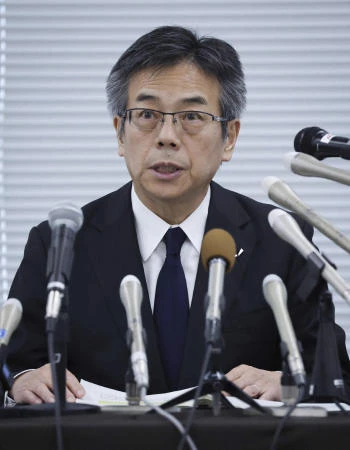
"We take the severe criticism from the third-party committee seriously and with the utmost sincerity," President Kingo Hayashi told a press conference, apologising for repeated irregularities in submitting seismic wave data since 2012.
Hayashi and Chairman Satoru Katsuno will resign on September 30. Minoru Yasui, currently a director, will become president on October 1.
Many of Japan's nuclear power plants have long been idled since the 2011 Fukushima nuclear disaster and are undergoing re-licensing to meet stricter safety standards.
After news of the data scandal emerged in January, Japan's nuclear watchdog suspended its safety review for the Hamaoka plant in central Japan, Chubu's sole nuclear power plant.
The scandal has been a setback for the industry at a time when nuclear power has regained prominence with the Russia-Ukraine war and the Iran crisis highlighting Japan's need to strengthen energy security.
Tokyo Electric Power restarted a reactor at its Kashiwazaki-Kariwa plant earlier this year.
While Chubu is withdrawing its current application for a restart, it plans to reapply after restructuring its organisation and operational processes, Hayashi said.
As of August, Japan had only 11 nuclear reactors in operation, with a combined capacity of about 10 gigawatts. Before the Fukushima disaster, Japan operated 54 reactors.
Reuters