
Takaichi sets Japan's strategic outlook based on the U.S. Alliance and Middle East “engagement”
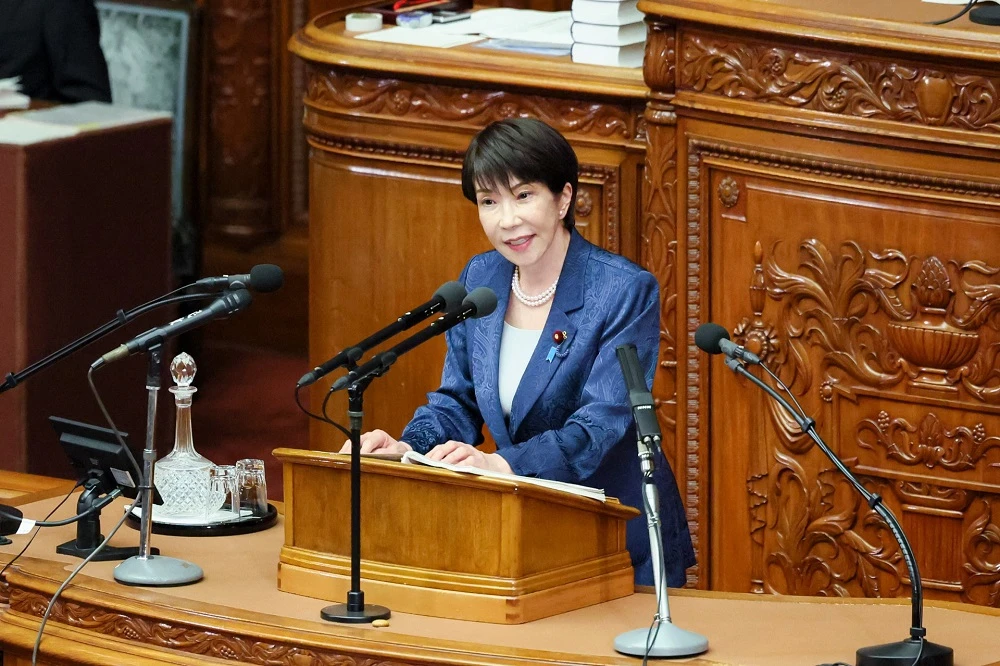


TOKYO: Japan’s Prime Minister TAKAICHI Sanae on Monday set her Government’s foreign policy during her policy speech at the 222nd session of the National Parliament (Diet).
Takaichi began with a somber note, expressing deep condolences to the family of a victim in a recent robbery and murder case involving a U.S. Marine in Okinawa. She emphasized that the government had lodged a strong protest and was demanding full cooperation from the U.S. side to prevent future incidents. She also addressed the need to reduce the burden on Okinawa through base relocation to Henoko, aiming for the earliest possible return of Futenma Air Base, and utilizing the Regional Future Strategy to realize a strong Okinawan economy.
While Takaichi expressed strong condemnation regarding the criminal incident, she simultaneously reaffirmed the Japan-U.S. alliance as the cornerstone of Japan's foreign policy, highlighting a complex balance between addressing local grievances and maintaining strategic security ties, with a pledge to further strengthen its deterrence and response capabilities and elevate the partnership to even greater heights.
Regarding the Middle East, the Prime Minister noted that conflicts in the region are contributing to a global landscape where the international order is being challenged by the use of force. Furthermore, she identified the Middle East as a key region within the Global South, emphasizing that Japan will strengthen relations with these nations, alongside India, Africa, and Latin American countries, to expand its options and presence in a multipolar world.
Prime Minister Takaichi reaffirmed Japan's commitment to the rule of law, noting the country's support for international courts and its role in peaceful dispute resolution. A central pillar of her vision is the evolution of the Free and Open Indo-Pacific, or FOIP, which seeks to foster resilience and prosperity. This includes economic initiatives such as the Partnership for Strengthening Asia's Energy and Resource Supply Capabilities, known as POWERR Asia, which involves building stockpiling systems, providing credit, and strengthening cooperation between oil-producing and consuming countries to support energy security and economic growth in Asia.
She highlighted the importance of shuttle diplomacy with South Korea and deepened cooperation with ASEAN.
Regarding China, she described a complex relationship where Japan seeks a strategic mutually beneficial partnership while remaining firm on significant challenges. These disagreements include various issues in the East China Sea and South China Sea, military activities around Japan, coercive measures, the safety of Japanese citizens, and human rights concerns.
She also addressed the ongoing humanitarian issue of abductions by North Korea and the difficult but necessary pursuit of a peace treaty with Russia regarding the Northern Territories.
The Prime Minister policy speech concluded with a focus on national security and economic stability. Takaichi announced plans to review the Three Documents by the end of the year to fundamentally strengthen defense capabilities, improve the treatment of Self-Defense Forces personnel, and strengthen support for retired personnel and their families.
She highlighted the newly established National Intelligence Council and National Intelligence Agency as vital tools for enhancing cross-ministerial information gathering and analysis. Furthermore, she outlined plans to create regulations concerning the transfer of land ownership in areas surrounding defense-related facilities and on border islands, and to introduce a registration system for information on beneficial owners of corporations to address money laundering and economic security.
The Prime Minister emphasized that peace requires active effort, promising that her cabinet would continue to protect the lives, property, and territory of the Japanese people.